Datadog APM Alternative: Replace Datadog with Claude Code + OpenTelemetry in 2026 (Save $300K+/year)
Independent guide to replacing Datadog APM with a Claude Code-built observability stack on OpenTelemetry, Grafana, Tempo, and Loki. Cost breakdown, feature parity, when Datadog still wins.
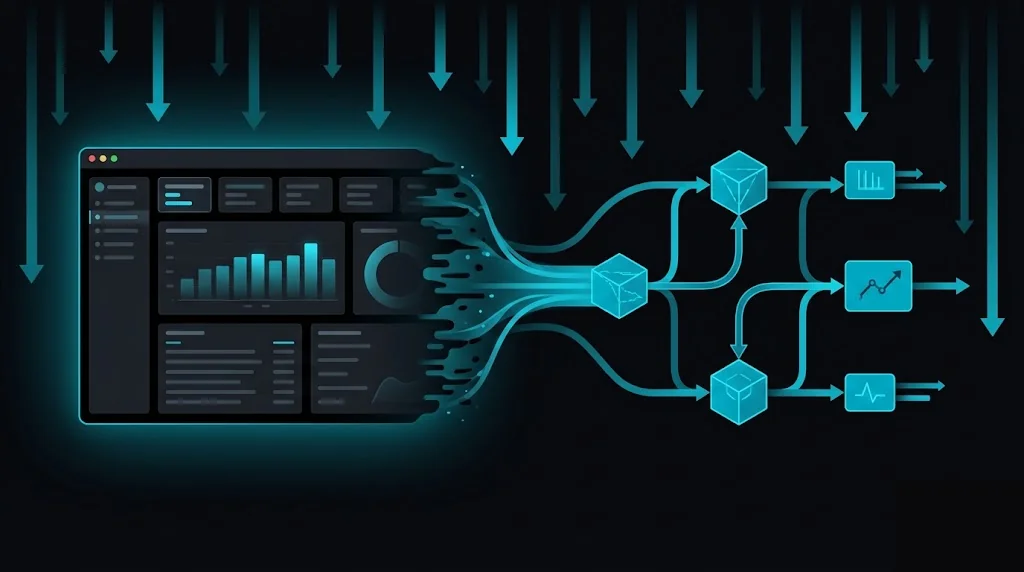
Datadog APM is the dominant commercial application performance monitoring platform. It earned that position by being genuinely good - turnkey integrations, polished UI, fast rollout - at a time when the open-source alternatives required significant engineering investment to assemble into a coherent stack. In April 2026, with OpenTelemetry maturing into a true standard and Claude Code accelerating the buildout of self-hosted observability, the math has shifted decisively for many organizations.
This guide is a practical comparison of Datadog APM to a Claude Code-built stack on OpenTelemetry, Grafana Tempo, Loki, Mimir, and Grafana. We cover the cost breakdown, the workflow, the feature parity matrix, and the specific scenarios where paying Datadog still makes sense.
What Datadog APM actually does (and what it charges)
Datadog APM ingests distributed traces from your applications via the Datadog agent or OpenTelemetry, correlates them with logs and infrastructure metrics, and exposes the data through a managed UI with dashboards, alerts, anomaly detection, and AI-assisted root cause analysis.
Datadog publishes pricing on its website, but the effective cost is famously hard to predict because it scales across multiple consumption dimensions. Headline rates as of early 2026:
- APM hosts: $31-$40 per host per month committed
- Indexed spans: $1.06-$2.12 per million indexed spans
- Custom metrics: $0.05 per custom metric per month (this is where bills explode)
- Log management: $0.10-$2.55 per GB depending on tier and retention
- Profiling, RUM, synthetics, security: separate per-host or per-event pricing
For a representative mid-market production environment (100 hosts, moderate trace volume, 30-day log retention, basic custom metrics):
- Year 1 cost: typically $200K-$600K depending on data volume and feature mix
- Multi-year contracts: typically lock in 30-50% discount but commit to volume growth
The horror story most platform engineers can quote: Coinbase’s $65M Datadog bill, driven primarily by custom metrics cardinality. The pattern repeats at smaller scale across many engineering organizations: spend is unpredictable, scales superlinearly with usage, and once your observability is wired into Datadog dashboards and alerts, migration is expensive.
The pitch for paying is real. Datadog ships fast, integrates broadly, and removes operational burden. The question is whether that value justifies prices that have driven a substantial industry pushback and a wave of “we left Datadog” engineering blog posts. With AI-assisted development collapsing the cost of building the alternative stack, the answer for most mid-market organizations is now no.
The 80% Claude Code can replicate this weekend
The OpenTelemetry ecosystem has matured into a genuine standard. The reference architecture for self-hosted observability in 2026 is:
- Collection: OpenTelemetry Collector with auto-instrumentation libraries
- Traces: Grafana Tempo (or ClickHouse via SigNoz)
- Logs: Grafana Loki (or ClickHouse, or VictoriaLogs)
- Metrics: Grafana Mimir (or VictoriaMetrics, or Prometheus + remote write)
- UI and alerting: Grafana with Alertmanager
- Storage: S3-compatible object storage (cheap)
Each piece is mature, production-grade, and used at significant scale by named engineering organizations. The historical complaint - “this requires too much engineering effort to assemble” - was true in 2022. With Claude Code in 2026, it is not.
The actual buildout workflow looks like this:
You: "Generate a Helm values file for the OpenTelemetry Operator
deployment on Kubernetes that auto-instruments all pods in
namespaces labeled otel-instrumentation=enabled. Configure the
collector to export traces to a Tempo instance at tempo.observability.svc,
logs to Loki at loki.observability.svc, and metrics to Mimir at
mimir.observability.svc. Use the OTLP gRPC protocol with TLS
enabled. Include retry, batching, and memory limit configuration
suitable for ~100 instrumented pods."
Claude Code generates the Helm values, the collector configuration, the OTLP exporter setup, and the auto-instrumentation annotations. You review and apply.
You: "Generate Grafana dashboard JSON for an APM-style application
overview: request rate, error rate, p50/p95/p99 latency per service,
top 10 slowest endpoints, and a service map showing inter-service
call latencies. Use Tempo as the trace data source and the auto-
generated RED metrics from the OpenTelemetry collector."
Claude Code generates dashboard JSON. You import to Grafana, adjust queries to match your service naming, and you have the equivalent of Datadog’s APM service overview.
You: "Write a Tempo TraceQL query that finds all traces from the
last hour where total duration exceeded 2 seconds and the trace
involves the payment-service and the database-proxy-service. Output
the trace IDs sorted by duration descending."
Trace investigation queries that previously required Datadog’s UI now work in Grafana with TraceQL. Claude Code writes the queries from natural language.
The buildout is iterative. Week 1: stack up. Week 2: instrument three services and validate end-to-end. Week 3: build dashboards. Week 4: tune alerts. By Week 6, you have a production-grade observability stack that costs an order of magnitude less than Datadog.
Cost comparison: 12 months for a 100-host production environment
| Line item | Datadog APM (full stack) | Claude Code + OpenTelemetry stack |
|---|---|---|
| APM hosts | $40K-$50K/year | $0 |
| Indexed spans | $20K-$80K/year | $0 |
| Log management | $30K-$100K/year | $0 (storage cost only) |
| Custom metrics | $20K-$200K/year (volatile) | $0 |
| Infrastructure (compute, storage) | included | $6K-$36K/year for stack VMs and object storage |
| Software licenses | included | Claude Pro $240/year per analyst (~$1,200) |
| Engineering time to set up | 4-12 weeks of vendor onboarding | 4-8 weeks of senior SRE = $20K-$50K |
| Engineering time to maintain | ~40 hours/year (mostly liaison) | ~200-400 hours/year for stack ops, upgrades, tuning |
| Procurement and security review | 4-8 weeks | Internal change review only |
| Total Year 1 | $200K-$600K+ | $50K-$120K |
| Year 2 onward | $200K-$600K+/year (often increasing) | $25K-$60K/year |
For a representative mid-market team, the Claude Code path saves $100K-$500K in Year 1 and $150K-$540K every year after. Critically, the Datadog cost grows with usage; the self-hosted cost grows much more slowly because storage is cheap and compute scales with workload count, not metric cardinality.
The hidden Datadog cost most teams underestimate is the operational drag of unpredictable bills. Engineers self-censor instrumentation to avoid blowing the custom metrics budget. Logs get under-retained because retention is expensive. Profiling stays off because per-host fees add up. The self-hosted stack inverts this incentive: you pay for storage, which is cheap, so you instrument generously and retain liberally.
The 20% commercial still wins (be honest)
Datadog brings real value a self-hosted stack does not.
Turnkey integrations. Datadog ships hundreds of pre-built integrations with databases, queues, SaaS tools, and infrastructure. OpenTelemetry has growing coverage but still requires more configuration for many integrations. If your environment is heavy on integrations rather than custom services, Datadog saves real engineering time.
Vendor-managed scale. When your trace cardinality explodes or your log volume spikes 10x overnight, Datadog absorbs it (you pay for it, but it stays up). Self-hosted Tempo/Loki/Mimir at the same scale requires capacity planning and operational attention. For organizations whose data volume is unpredictable or growing fast, vendor-managed scale has measurable value.
SLAs and 24/7 support. When the observability stack itself goes down at 3 AM, you debug it. When Datadog goes down, you have a vendor on the phone (and a status page to point at). Self-hosted observability requires building the on-call expertise to debug an open-source stack under pressure.
Compliance certifications. Datadog has SOC 2 Type II, HIPAA, PCI DSS, and ISO 27001 certifications. If your security team requires that any tool processing application data have these certifications, an internal stack fails that gate unless you do internal certification work. Some organizations can get exceptions; some cannot.
AI-assisted root cause analysis. Datadog’s Watchdog and Bits AI features analyze incidents and suggest root causes. Self-hosted stacks do not have this out of the box. You can build similar capability with Claude Code - analyzing your own observability data is a natural fit - but it is a separate project.
Decision framework: should you build or buy?
You should keep paying for Datadog if any of these are true:
- You have less than one full-time SRE/platform engineer and no consulting budget for the buildout
- Your security team mandates SOC 2/HIPAA/PCI DSS vendor certifications with no exception path
- Your data volume scales unpredictably and operational capacity planning is a meaningful drag
- You need vendor-managed integrations with rare or proprietary tools that lack OpenTelemetry support
- Your engineering culture is “buy and integrate” rather than “build and operate”
- The Datadog bill is a small fraction of the engineering value it provides
You should consider building with Claude Code + OpenTelemetry if any of these are true:
- Your Datadog bill exceeds $50K/year and is growing faster than your engineering headcount
- You have at least one senior SRE/platform engineer who can own the observability stack
- Your application portfolio is custom services (instrumented well by OpenTelemetry) rather than off-the-shelf integrations
- You want full control over data retention, sampling, and cost
- Your team is already running Kubernetes and is comfortable operating stateful workloads
- You have observability use cases (long retention, high cardinality, profiling) that Datadog’s pricing model penalizes
For most mid-market engineering organizations under $10M annual cloud spend with a mature platform team, the build path with Claude Code wins on cost and control.
How to start (this weekend)
If you want to evaluate the build path, here is the concrete first step.
Stand up the stack in a non-production cluster. Use Helm to deploy the OpenTelemetry Operator, Grafana Tempo, Loki, Mimir, and Grafana. Claude Code generates the values files. Total time: an afternoon.
Instrument one service end-to-end. Pick a representative service. Use Claude Code to add OpenTelemetry SDK calls (or use auto-instrumentation if available for your runtime). Generate one trace, see it in Tempo, see logs correlated in Loki. Total time: a day.
Replicate one Datadog dashboard. Pick the dashboard your team uses most. Generate the Grafana equivalent with Claude Code. Compare side by side. Total time: a day.
Migrate one alert rule. Pick a critical alert. Implement it as a Grafana alert rule against Mimir. Validate it fires correctly. Total time: half a day.
Estimate the full migration cost. Multiply by your service count, dashboard count, and alert count. Compare to your annual Datadog bill. Decide based on real data.
If the math works, build a 6-week migration plan. We have helped multiple teams execute this migration. If you want hands-on help, get in touch.
Related reading
- Datadog vs Dynatrace: Which APM Wins in 2026
- Datadog vs New Relic vs Grafana Stack: APM Comparison for Startups
- SLOs, SLIs, and Error Budgets: The Complete Guide for Engineering Teams
- Hire Performance Engineering Consultants
Disclaimer
This article is published for educational and experimental purposes. It is one engineering team’s opinion on a build-vs-buy question and is intended to help SRE, platform, and observability engineers think through the trade-offs of AI-assisted self-hosted observability. It is not a procurement recommendation, a buyer’s guide, or a substitute for independent evaluation.
Pricing figures cited in this post are approximations based on Datadog’s public pricing pages, customer-reported procurement disclosures, public engineering blog posts about observed bills, industry reports, and conversations with observability practitioners. They are not confirmed by the vendor and may not reflect current contract terms, regional pricing, volume discounts, or negotiated rates. The widely-reported $65M Datadog bill referenced in this post is cited as a publicly-discussed example, not as a representative outcome. Readers should obtain current pricing directly from vendors before making any procurement or budget decision.
Feature comparisons reflect the author’s understanding of each tool’s capabilities at the time of writing. Both commercial products and open-source projects evolve continuously; specific features, limitations, integrations, and certifications may have changed since publication. The “80%/20%” framing throughout this post is intentionally illustrative, not a precise quantitative claim of feature parity.
Code examples, configuration snippets, and Claude Code workflows shown in this post are illustrative starting points, not turnkey production software. Implementing any observability stack in production requires engineering judgment, capacity planning, security review, operational hardening, on-call expertise, and ongoing maintenance that this post does not attempt to provide. Self-hosted observability has real operational costs that must be weighed against vendor SaaS costs.
Datadog, OpenTelemetry, Grafana, Tempo, Loki, Mimir, New Relic, Dynatrace, AppDynamics, Splunk, Honeycomb, Sentry, and all other product and company names mentioned in this post are trademarks or registered trademarks of their respective owners. The author and publisher are not affiliated with, endorsed by, sponsored by, or in any commercial relationship with Datadog, Cisco, Splunk, Grafana Labs, Honeycomb, Sentry, the OpenTelemetry project, or any other vendor mentioned. Mentions are nominative and used for descriptive purposes only.
This post does not constitute legal, financial, or investment advice. Readers acting on any guidance in this post do so at their own risk and should consult qualified professionals for decisions material to their organization.
Corrections, factual updates, and good-faith disputes from any party named in this post are welcome - please contact us and we will review and update the post promptly where warranted.
Frequently Asked Questions
Is there a free alternative to Datadog APM?
Yes. The OpenTelemetry collector plus Grafana Tempo (traces), Loki (logs), Mimir (metrics), and Grafana itself (dashboards) is a fully open-source observability stack that replicates 80-90% of Datadog APM's functionality. Self-hosted on your own Kubernetes cluster, the infrastructure cost is typically $500-$3,000 per month depending on data volume - versus Datadog bills that frequently run $30,000-$100,000+ per month for the same workloads. Claude Code accelerates the buildout from a multi-month project to a 2-4 week effort.
How much does Datadog APM cost compared to a Claude Code OpenTelemetry build?
Datadog's pricing is consumption-based and notoriously hard to predict. APM alone runs $31-$40 per host per month committed pricing, plus per-million-spans charges, plus log indexing fees, plus custom metric fees. A 100-host production environment with moderate trace volume and log retention typically costs $15,000-$50,000 per month ($180K-$600K/year). Notable Datadog bill spikes - like the widely-reported $65M annual bill from one customer - are caused by exponentially-priced custom metrics. The Claude Code + OpenTelemetry stack on equivalent infrastructure runs $500-$3,000/month for storage and compute, plus ~$240/year per developer for Claude Pro. Year-1 total is typically $30K-$80K fully loaded with engineering time.
What does Datadog APM do that Claude Code + OpenTelemetry cannot replicate?
Datadog APM brings four things a self-hosted stack does not: (1) turnkey integrations with hundreds of services (databases, queues, SaaS tools) auto-instrumented out of the box, (2) vendor-managed scale for very high cardinality data without operational burden, (3) SLAs and 24/7 support that simplify on-call when the observability stack itself is the problem, (4) compliance certifications (SOC 2, HIPAA, PCI DSS) that reduce security review friction. If any of these are dealbreakers for your organization, keep paying Datadog. If none are, you can build.
How long does it take to replace Datadog APM with Claude Code?
A senior platform/SRE engineer working with Claude Code can stand up a working OpenTelemetry stack on Kubernetes in 2-4 weeks. The stack: OpenTelemetry Collector with auto-instrumentation, Grafana Tempo for traces (or ClickHouse via SigNoz), Loki for logs, Mimir for metrics, Grafana for dashboards and alerting. Add another 2-4 weeks for production hardening (multi-tenancy, retention policies, runbooks, alert tuning). Total roughly 4-8 weeks vs. 3-6 months of typical Datadog onboarding for an enterprise contract.
Is the Claude Code OpenTelemetry stack production-ready?
Yes, when properly hardened. OpenTelemetry, Tempo, Loki, Mimir, and Grafana are all production-grade open source projects used at scale by major engineering organizations (including some that publish their experience replacing Datadog). The work that determines success is the integration and operational layer: instrumentation rollout to your services, retention policy tuning, query optimization for your specific workloads, and on-call runbook authoring. Claude Code accelerates each of these significantly, but the engineering judgment is still required. Most teams reach production-ready quality in 4-8 weeks of part-time work.
When should we still pay for Datadog instead of building?
Pay for Datadog when: (1) your team has no SRE/platform engineering capacity and the consulting cost of building exceeds the SaaS cost of buying, (2) your security team requires SOC 2/HIPAA/PCI DSS vendor certifications and an internal stack would not pass review, (3) your trace/metric/log volume is so high that the operational burden of running the observability stack yourself exceeds the Datadog bill, (4) you need vendor-managed integrations with rare or proprietary tools, or (5) your organization is acquiring/merging frequently and needs vendor-managed multi-tenant access controls. For everyone else - and that is most engineering organizations under $10M annual cloud spend - the build path with Claude Code saves real money and gives you observability you actually understand.
Your P99 Deserves Better
Book a free 30-minute performance scope call with our engineers. We review your latency profile, identify the most impactful optimization target, and scope a sprint to fix it.
Every engagement is scoped by our principal architect, Adrian Vale: 20+ years in production engineering, 40+ professional certifications. Meet Adrian
Talk to an Expert